

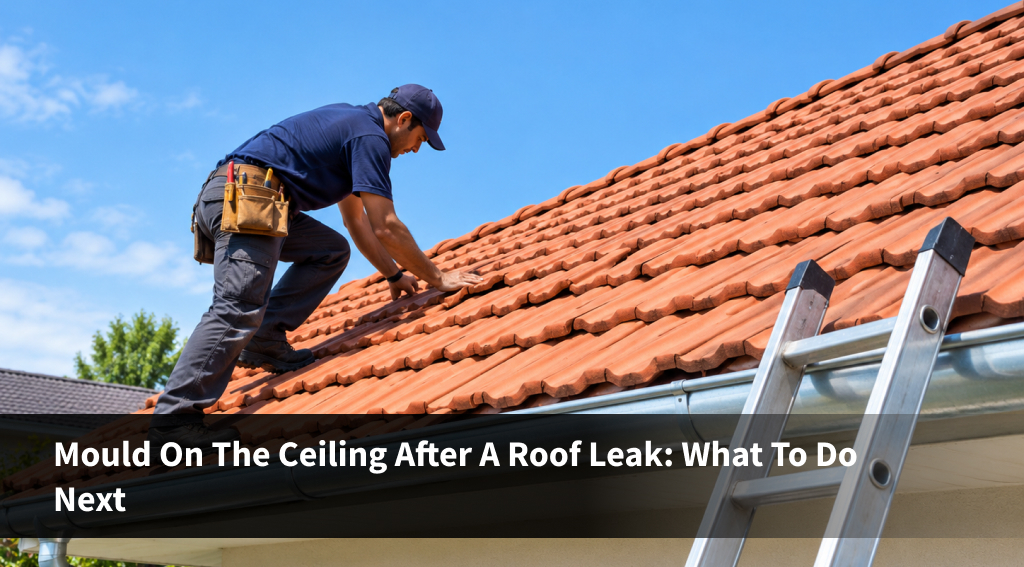
Mould on the ceiling after a roof leak usually means moisture has remained trapped in the ceiling, insulation, or surrounding materials. First, stop the source of the leak, then dry the affected area and assess the extent of the mould and water damage. If the ceiling is badly affected, professional roof and mould assessment can help prevent the problem from spreading.
A roof leak allows water to enter areas that should normally stay dry. Even after the visible leak stops, moisture can remain inside ceiling materials, insulation, timber, or wall cavities.
Warm, damp and poorly ventilated areas create conditions where mould can develop quickly. That’s why you may notice dark spots, stains, musty smells, or patches of mould days after a leak.
In some cases, the mould is only visible on the ceiling surface. However, the moisture problem may extend further behind the surface.
Common signs of mould after a roof leak include:
The most important thing is to address both the mould and the moisture source. Cleaning the visible mould without fixing the roof leak can allow the problem to return.
Start by identifying where the water is entering. The visible ceiling stain does not always line up directly with the point where the roof is leaking.
Damaged roof tiles, flashing, valleys, gutters, or other roofing components can allow water to travel before it reaches the ceiling.
If the leak is still active, arrange a professional roof inspection as soon as possible.
Once the leak has been dealt with, look beyond the visible mould.
Water may have affected more than the surface of the ceiling. For example, insulation, plasterboard, timber, and areas inside the ceiling cavity can also become damp.
Pay particular attention to:
If the ceiling feels soft or has started to sag, avoid putting pressure on the affected area and arrange an assessment.
Proper drying is essential because mould thrives in damp conditions.
Where appropriate, improve ventilation and use suitable drying equipment. However, avoid disturbing heavily contaminated or damaged materials unnecessarily.
If moisture has reached insulation or concealed areas, professional assessment may be needed to determine what can be dried and what may need replacement.
Small surface mould spots may sometimes be manageable, but extensive mould growth can require professional treatment.
You should be particularly careful if the mould covers a large area, keeps returning, or is accompanied by significant water damage.
In addition, damaged ceiling materials may need to be repaired or replaced rather than simply cleaned.
No. Painting over mould may hide the marks for a while, but it does not solve the problem underneath.
If moisture is still present, the mould can return and the ceiling may continue to deteriorate. Similarly, if the roof leak has not been properly repaired, more water can enter the same area.
A better approach is:
Find the leak → Fix the source → Dry the affected area → Check for water damage → Treat the mould → Repair the ceiling if needed
This way, you are dealing with the cause instead of simply covering up the evidence.
The size of the mould patch is not the only thing that matters. The condition of the ceiling, how long it has been wet, and whether the moisture has reached hidden areas can all affect the extent of the damage.
Sign | What It May Indicate | What to Do |
Small surface spots | Localised mould growth | Identify and remove the moisture source |
Musty smell | Hidden moisture or mould | Inspect the surrounding area |
Yellow or brown stain | Previous or ongoing water intrusion | Check the roof for leaks |
Peeling or bubbling paint | Moisture behind the surface | Assess the ceiling material |
Soft or sagging ceiling | Significant water damage | Seek professional assessment promptly |
Mould that keeps returning | Ongoing moisture problem | Investigate the roof and affected structure |
A professional inspection is especially important when the ceiling has changed shape, feels soft, or shows signs of significant water penetration.
Preventing mould starts with preventing moisture from entering the building.
Regular roof inspections can help identify damaged or deteriorating areas before they develop into larger leaks.
Depending on the roof, maintenance may include checking tiles, flashing, valleys, gutters, seals, and other vulnerable areas.
A small roof leak can become a much bigger problem if water continues entering the ceiling cavity.
For example, a minor roof defect may initially cause a small stain. If left unresolved, repeated moisture exposure can contribute to mould growth and damage to ceiling materials.
Good ventilation helps reduce excess moisture inside the home. Bathrooms, kitchens, and other areas with high humidity should have suitable ventilation.
However, ventilation alone will not solve mould caused by an active roof leak. The source of the moisture must still be addressed.
Even after the roof has been repaired, check the affected ceiling from time to time.
If the stain becomes darker, a musty smell returns, or mould starts appearing again, there may still be moisture present.
Getting this checked early can help stop a small recurring issue from becoming a larger repair.
You should consider professional help when the leak is difficult to locate, the ceiling has visible structural damage, or mould continues to return after cleaning.
Professional roof inspections can help identify the source of water entry and determine whether repairs are needed.
At Macarthur Roofing and Restorations, we can assess roofing issues that may be contributing to water damage and help homeowners understand the next steps for getting their roof back into good condition.
Getting the underlying roof problem addressed early can help prevent further moisture damage and reduce the chance of recurring ceiling mould.
Ignoring mould after a roof leak can allow the moisture problem to continue unnoticed.
Over time, persistent moisture may contribute to deterioration of ceiling materials, insulation, timber, paint, and other parts of the affected area.
In addition, simply cleaning visible mould without repairing the roof can result in the mould returning.
That’s why it is important to treat the roof leak and the resulting moisture damage as connected problems rather than separate issues.
Mould on the ceiling after a roof leak should not be treated as just a cosmetic issue. It usually points to moisture that needs to be found, stopped, and properly dried.
Start by fixing the roof leak, then check the affected ceiling for hidden water damage and signs of recurring moisture. If the ceiling is sagging, the mould is widespread, or the problem keeps coming back, professional help can make it easier to identify the underlying issue.
If you have noticed ceiling mould after a roof leak or signs of water damage in your home, addressing the roofing issue early can make the repair process more manageable. Macarthur Roofing and Restorations can help assess the roofing problem and determine the appropriate next steps.
Mould can start developing when moisture remains in an area for long enough, particularly in warm and poorly ventilated conditions. The exact timing varies depending on humidity, temperature, the amount of water, and the materials affected.
Black mould on a ceiling should not be ignored, especially when it appears after water damage. The important step is to identify the moisture source, assess the affected area, and arrange appropriate treatment rather than relying on appearance alone.
Fixing the roof leak removes the source of new moisture, but existing mould may still remain. The affected area may need cleaning, treatment, drying, or replacement depending on the extent of the damage.
Yes. Water entering through a roof can travel into ceiling cavities and other concealed areas. If those areas remain damp, they can provide suitable conditions for mould growth.
Recurring mould usually indicates that the underlying moisture problem has not been fully resolved. This could be caused by an ongoing roof leak, trapped moisture, condensation, poor ventilation, or another source of dampness.
Replacement may be necessary when ceiling materials are extensively water-damaged, sagging, swollen, deteriorated, or contaminated. The appropriate solution depends on the condition and extent of the damage.